
The Impact of Strength Training on Longevities: Why Muscles Are Your Best Health Savings Account
When most people think of strength training or lifting weights, they immediately associate it with youth, bodybuilding, or purely aesthetic goals. However, modern scientific consensus has shifted the narrative entirely. Today, muscle tissue is recognized not just as a tool for movement, but as a critical, active endocrine organ that dictates how well—and how long—we live.
In the medical and health scientific community, skeletal muscle mass is increasingly referred to as a “health savings account.” Just as financial savings protect you against unexpected economic downturns, metabolic and muscular reserves protect your body against physical stress, disease, and the natural biological declines associated with aging.
In this article, we will delve into the physiological mechanisms that link strength training to human longevity and explain why lifting weights is one of the most effective preventive medicines available.
Muscle as an Endocrine Organ
For decades, muscle was viewed simply as a system of levers and pulleys designed to move the skeleton. We now understand that when muscles contract against resistance, they secrete hundreds of small signaling proteins called myokines.
Myokines travel through the bloodstream and communicate directly with other organs, including the liver, pancreas, brain, and fat tissue. They play an essential role in reducing systemic inflammation, improving insulin sensitivity, and even promoting neuroplasticity (the brain’s ability to grow and adapt). By engaging in regular strength training, you are essentially triggering a natural, full-body biochemical reset that counters the chronic, low-grade inflammation typically associated with aging (often termed “inflammaging”).

4 Ways Strength Training Functions as a Health Savings Account
1. Metabolic Resilience and Blood Sugar Regulation
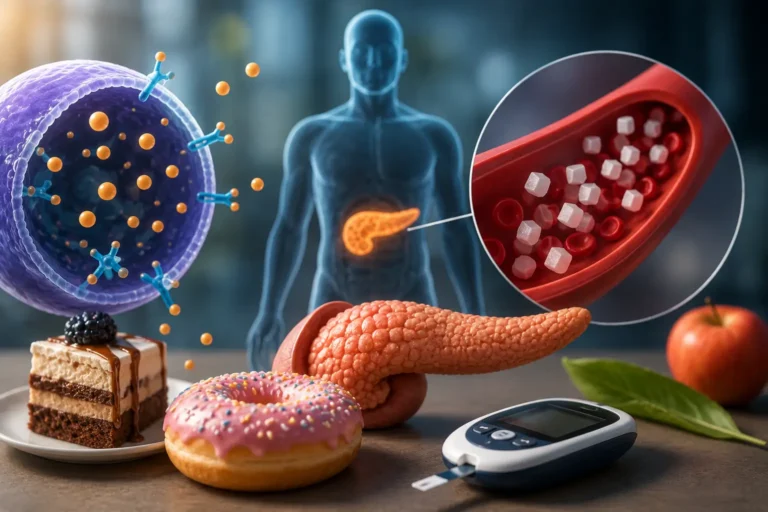
Skeletal muscle is the primary clearinghouse for glucose in the human body. When you consume carbohydrates, your muscles absorb the resulting glucose from the bloodstream to store it as glycogen. The more muscle mass you have, and the more active it is, the larger your “sink” for disposing of blood sugar. Regular resistance training significantly improves insulin sensitivity, making it a cornerstone habit for preventing metabolic dysfunction and type 2 diabetes.
2. Prevention of Sarcopenia and Osteoporosis
As we age, we naturally begin to lose muscle mass and function—a biological process known as sarcopenia—as well as bone mineral density. This decline typically accelerates after the age of 40. Resistance training places mechanical stress on both the muscles and the bones. In response to this stress, the body osteoblasts (cells that build bone) and triggers muscle protein synthesis. This dual mechanism keeps your skeletal structure robust, significantly lowering the risk of fractures and frailty later in life.

3. Cardiovascular Protection
While aerobic exercise (like running or cycling) is highly beneficial for heart health, strength training offers unique, complementary cardiovascular protection. Resistance exercises help reduce systemic vascular resistance, which translates to healthier blood pressure levels. Furthermore, the metabolic improvements associated with increased muscle mass help optimize blood lipid profiles, reducing long-term cardiovascular risks.
4. Hormonal and Cognitive Support
Strength training stimulates the natural production of anabolic hormones, such as growth hormone and testosterone, which are vital for cellular repair and tissue regeneration. Additionally, the myokines released during intense muscle contractions—specifically one known as BDNF (Brain-Derived Neurotrophic Factor)—help support brain health, protect cognitive function, and mitigate the risk of neurodegenerative conditions as the decades pass.
Implementing Longevity-Focused Resistance Training
To build a robust health savings account, consistency and proper progression are far more important than lifting extreme weights. A well-rounded approach for lifelong vitality generally includes:
Compound Movements: Focus on multi-joint exercises that mimic natural human patterns, such as squats, hinges (deadlifts), pushes (chest or shoulder presses), and pulls (rows or pull-downs).
Frequency: Engaging in structured resistance training 2 to 3 times per week is generally sufficient to stimulate muscle synthesis and preserve bone density.
Progressive Overload: Gradually increasing the challenge—whether by adding slight weight, performing more repetitions, or improving form—ensures the body continues to adapt and grow stronger.

Conclusion: Invest in Your Future Self
Every single repetition of a resistance exercise is an investment in your future physical autonomy. The muscle mass you build and maintain today determines your ability to carry your own groceries, climb stairs, maintain balance, and remain entirely independent in the decades to come. Aesthetics are simply a pleasant side effect; the true reward of strength training is a resilient, long-lasting body.
Safety Disclaimer: This content is strictly for informational and educational purposes. Individuals, especially those with pre-existing cardiovascular, joint, or metabolic conditions, should consult a qualified healthcare professional or a certified physical therapist before beginning a new strenuous exercise regimen to ensure movements are tailored to their specific biometrics.