Creatine for Non-Athletes: Why It’s Becoming a Top Brain Health Supplement
For decades, creatine has been associated almost exclusively with bodybuilders, powerlifters, and elite athletes looking to maximize strength and muscle performance.
But a growing body of research is challenging that perception.
Today, scientists are increasingly investigating creatine’s role far beyond the gym. Emerging evidence suggests that creatine may support cognitive function, mental energy, healthy aging, and overall brain health—even in people who have never lifted a weight in their lives.
As a result, creatine has become one of the most talked-about supplements in the fields of neuroscience, longevity, and wellness science.
So what exactly is creatine, and why are researchers paying so much attention to its potential effects on the brain?
Let’s take a closer look.
What Is Creatine?
Creatine is a naturally occurring compound found in muscle tissue and the brain.
The body produces creatine from amino acids, primarily in the liver, kidneys, and pancreas. It can also be obtained through foods such as:
- Red meat
- Fish
- Poultry
Once produced or consumed, creatine is stored primarily in muscles, where it helps generate rapid energy.
However, approximately 5% of the body’s creatine stores are found in the brain, where they play an important role in cellular energy production.
This is where much of the recent scientific interest originates.
Why the Brain Needs Energy
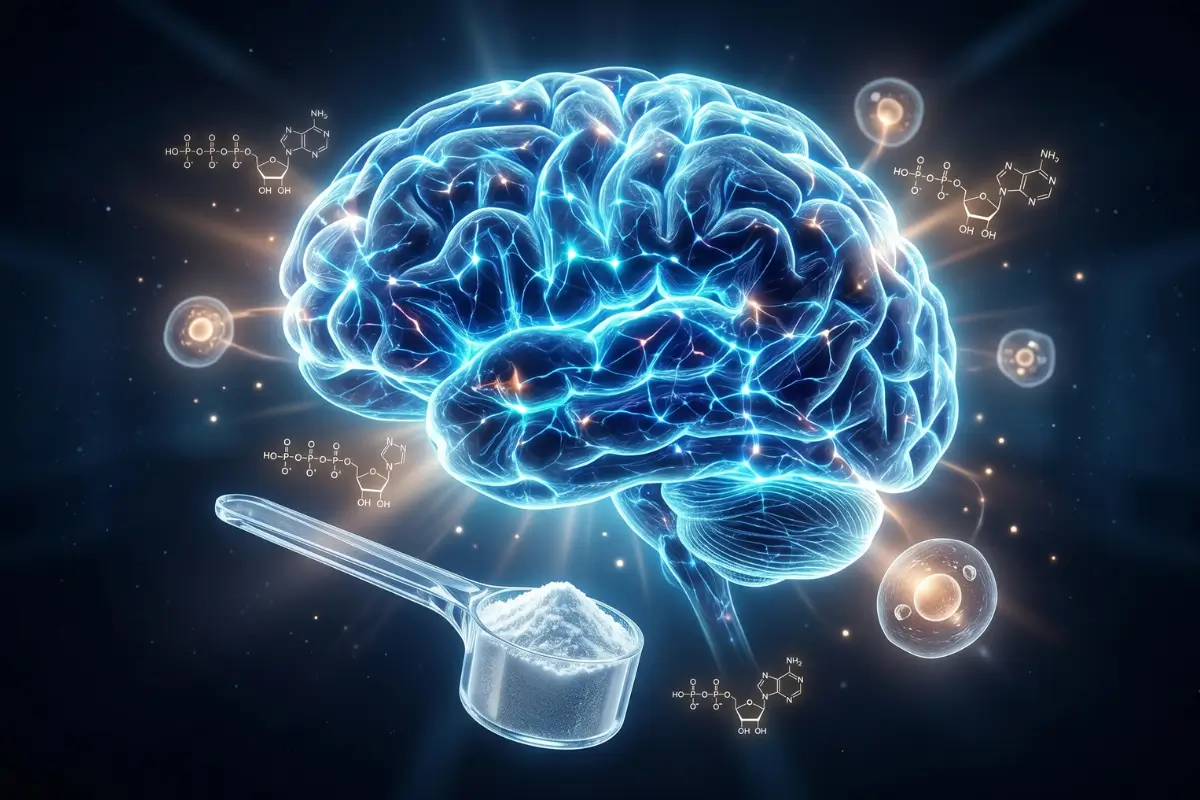
The human brain represents only about 2% of total body weight but consumes roughly 20% of the body’s energy.
Every thought, memory, decision, and movement requires a constant supply of cellular fuel.
The brain relies heavily on a molecule called ATP (adenosine triphosphate), often referred to as the body’s energy currency.
Creatine helps recycle ATP more efficiently.
Think of creatine as an emergency battery backup system that helps cells quickly regenerate energy when demands increase.
While this mechanism is well known in muscle tissue, researchers are now exploring how it may benefit the brain as well.
Creatine and Cognitive Performance
One of the most exciting areas of research involves creatine’s potential role in supporting cognitive function.
Scientists have investigated whether supplemental creatine may help improve aspects of mental performance such as:
- Working memory
- Mental processing speed
- Cognitive resilience
- Problem-solving ability
- Focus during demanding tasks
Some studies suggest that creatine may be particularly helpful during periods of increased cognitive demand, such as:
- Sleep deprivation
- Intense studying
- High-stress work environments
- Mental fatigue
Researchers believe these benefits may be linked to creatine’s role in maintaining cellular energy availability.
Why Non-Athletes Are Taking Creatine
Traditionally, creatine supplementation was associated with muscle growth and athletic performance.
Today, however, many non-athletes are using creatine for entirely different reasons.
Mental Energy Support
Just as muscles require energy to function, the brain also depends on a steady supply of ATP.
Some individuals report improved mental stamina during long workdays or mentally demanding tasks.
Healthy Aging
Aging naturally affects both muscle mass and cognitive function.
Researchers are investigating whether maintaining adequate creatine stores may help support healthy aging processes.
Vegetarian and Vegan Diets
Because creatine is found primarily in animal foods, individuals following plant-based diets may naturally have lower creatine stores.
This has made creatine a topic of interest among vegetarians and vegans seeking nutritional optimization.
Sleep Deprivation Recovery
Preliminary research suggests creatine may help support cognitive performance during periods of insufficient sleep, although more research is needed.
What Does the Research Actually Say?
While creatine remains one of the most extensively studied supplements in sports nutrition, brain health research is still evolving.
Current findings suggest that creatine may support:
- Short-term memory
- Working memory
- Mental fatigue resistance
- Cognitive performance under stress
However, results vary between studies, and researchers continue to investigate which populations may benefit most.
Factors that may influence outcomes include:
- Age
- Diet
- Baseline creatine levels
- Sleep quality
- Overall health status
Importantly, creatine is not a stimulant.
Unlike caffeine, it does not provide an immediate sensation of alertness or energy.
Instead, its effects are believed to occur through support of cellular energy metabolism.

Is Creatine Safe?
Creatine is among the most researched dietary supplements available today.
Numerous studies have examined its safety profile across different populations.
For healthy adults, creatine monohydrate is generally considered well tolerated when used appropriately.
Some individuals may experience mild side effects such as:
- Temporary water retention
- Digestive discomfort
- Mild bloating
These effects are often dose-dependent and may improve with proper hydration and dosing strategies.
Individuals with existing medical conditions should consult a healthcare professional before beginning supplementation.
Which Form of Creatine Is Best?
Walk into a supplement store and you’ll find numerous forms of creatine, including:
- Creatine monohydrate
- Creatine hydrochloride (HCl)
- Buffered creatine
- Micronized creatine
- Creatine nitrate
Despite marketing claims surrounding newer forms, creatine monohydrate remains the most extensively studied and widely recommended option.
Reasons include:
- Strong research support
- High effectiveness
- Affordability
- Established safety profile
For most people, creatine monohydrate is considered the benchmark form.
How Much Creatine Do People Typically Take?
Many studies involving healthy adults use daily doses ranging from:
3–5 grams per day
Some protocols begin with a temporary loading phase, while others use a consistent daily dose from the start.
Because individual needs vary, supplementation decisions should be discussed with a qualified healthcare professional.
Who May Benefit Most?
Current research suggests creatine may be particularly relevant for:
Older Adults
Supporting healthy aging and maintaining cellular energy production.
Vegetarians and Vegans
Potentially helping offset lower dietary creatine intake.
Students and Knowledge Workers
Individuals exposed to prolonged periods of mental effort.
Busy Professionals
Those seeking nutritional support for demanding cognitive workloads.

Frequently Asked Questions
Is creatine only useful for athletes?
No. While creatine is widely known for its role in sports performance, researchers are increasingly studying its potential benefits for brain health, cognitive function, and healthy aging.
Does creatine improve memory?
Some studies suggest creatine may support aspects of memory and cognitive performance, particularly under conditions of mental stress or fatigue.
Can vegetarians benefit from creatine?
Because creatine is primarily found in animal foods, vegetarians and vegans may have lower baseline levels and may be more likely to benefit from supplementation.
Does creatine act like caffeine?
No. Creatine is not a stimulant and does not provide the immediate alertness associated with caffeine.
What form of creatine is most studied?
Creatine monohydrate remains the most researched form and is widely considered the reference standard in scientific studies.
Conclusion
Creatine’s reputation as a muscle-building supplement is well deserved, but modern research suggests its potential applications may extend far beyond athletic performance.
As scientists continue to explore the relationship between creatine and brain function, interest in this supplement is rapidly expanding among non-athletes, professionals, students, and healthy aging advocates.
Although research is still evolving, creatine’s role in supporting cellular energy production makes it one of the most intriguing compounds currently being studied in the fields of cognitive health and longevity.
For many people, the question is no longer whether creatine belongs in the gym—but whether it may also have a place in a broader wellness strategy.
Health Disclaimer: The information provided in this article is intended for educational and informational purposes only and should not be considered medical advice. It is not intended to diagnose, treat, cure, or prevent any disease or health condition. Dietary supplements may affect individuals differently and may interact with medications or existing health conditions. Always consult a qualified healthcare professional before starting any new supplement regimen, especially if you are pregnant, nursing, have a medical condition, or take prescription medications.
Did you find this article helpful? Have you tried any of the strategies, foods, or wellness practices discussed here? Share your thoughts and experiences in the comments below—we’d love to hear from you.