

The Surprising Health Benefits of Strength Training After 40
When many people think about aging well, they focus on maintaining a healthy diet, getting enough sleep, and staying socially active.
While all of these habits are important, one powerful factor is often overlooked: strength training.
After age 40, the body naturally begins experiencing gradual changes in muscle mass, strength, mobility, and metabolism. Although these changes are normal, regular resistance exercise may help support physical function and overall quality of life as we age.
The encouraging news is that strength training is not reserved for athletes or bodybuilders. In fact, it can benefit people of virtually all fitness levels.
In this article, we’ll explore why strength training after 40 has become one of the most recommended forms of exercise for healthy aging.
For evidence-based information about physical activity and healthy aging, the National Institute on Aging provides educational resources on exercise, strength training, and mobility for older adults: https://www.nia.nih.gov
Why Muscle Health Matters More After Age 40
As people age, maintaining muscle health becomes increasingly important.
Muscles support many essential daily activities, including:
- Walking
- Climbing stairs
- Carrying groceries
- Maintaining balance
- Performing household tasks
Over time, adults naturally experience gradual declines in muscle mass and strength. While this process is a normal part of aging, staying physically active may help support long-term mobility and independence.
This is one reason why health professionals often emphasize the importance of strength training benefits throughout adulthood.
What Is Strength Training?
Strength training, also known as resistance training, refers to exercises that challenge muscles against resistance.
Common examples include:
- Bodyweight exercises
- Resistance bands
- Dumbbells
- Kettlebells
- Weight machines
The goal is not necessarily to build large muscles but to maintain and improve strength, function, and physical resilience.
Many beginners are surprised to learn that even simple resistance exercises performed consistently can produce meaningful improvements.

Strength training can help support muscle health, mobility, and overall physical function as people age.
How Strength Training Supports Healthy Aging
One of the primary reasons experts recommend strength training is its potential role in supporting healthy aging.
Regular resistance exercise may help support:
- Physical function
- Joint stability
- Mobility
- Balance
- Daily activity performance
These benefits can contribute to maintaining an active and independent lifestyle later in life.
Rather than focusing solely on appearance, many adults over 40 view strength training as an investment in long-term health and functionality.
Strength Training and Muscle Mass After 40
Muscle tissue plays a critical role in movement and physical performance.
Research suggests that resistance exercise helps stimulate muscles through regular use and adaptation.
This is particularly important because maintaining muscle mass becomes more challenging with age.
Building a consistent strength-training routine may help support:
- Physical strength
- Endurance
- Functional movement
- Overall activity levels
Even modest improvements can make daily activities feel easier and more comfortable.
Can Resistance Exercise Support Metabolic Health?
In addition to supporting muscles, resistance exercise is increasingly studied for its relationship with metabolic health.
Physical activity influences how the body uses energy and supports overall wellness.
Many experts recommend combining strength training with healthy eating habits and regular movement throughout the day.
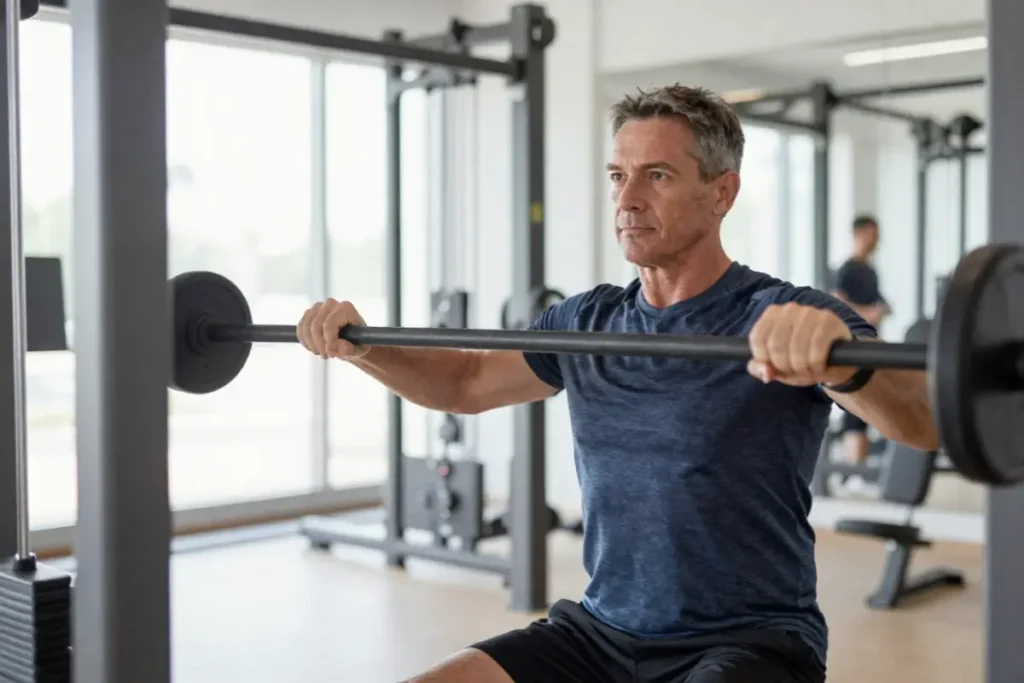
Strength Training and Balance, Mobility, and Independence
One of the most valuable benefits of maintaining strength is preserving the ability to move confidently through daily life.
Strong muscles contribute to:
- Stability
- Coordination
- Mobility
- Functional independence
Activities such as lifting objects, standing from a chair, carrying bags, and navigating stairs all rely on muscular strength.
For many adults, maintaining these abilities becomes an increasingly important goal with age.
The Connection Between Exercise and Brain Health
Physical activity is not only associated with physical well-being.
Researchers continue studying the relationship between exercise and various aspects of brain health, including cognitive performance and mental wellness.
Many adults report feeling more energetic, focused, and mentally refreshed after regular exercise.
Researchers continue exploring the connection between physical activity and brain health. If you’re interested in factors that may influence memory, focus, and mental clarity, explore our guide: BRAIN FOG: 9 COMMON CAUSES MOST PEOPLE IGNORE
How Often Should Adults Over 40 Strength Train?
There is no one-size-fits-all approach.
Factors such as:
- Fitness level
- Goals
- Schedule
- Health status
all influence the ideal training routine.
Many health organizations recommend incorporating resistance exercise multiple times per week alongside other forms of physical activity.
Beginners often benefit from starting slowly and focusing on consistency rather than intensity.

Frequently Asked Questions About Strength Training After 40
Is strength training safe after age 40?
For many healthy adults, strength training can be a safe and effective form of exercise when performed with proper technique and appropriate progression.
Do I need a gym to strength train?
No. Many resistance exercises can be performed at home using body weight, resistance bands, or simple equipment.
How often should adults over 40 perform strength training?
Many experts recommend including resistance exercise several times per week as part of a balanced physical activity routine.
Can strength training support healthy aging?
Research continues to show that maintaining muscular strength is an important component of long-term mobility, function, and independence.
Is strength training only for building muscle?
No. Many people strength train to support overall health, physical function, mobility, and quality of life.
Conclusion
The benefits of strength training after 40 extend far beyond the gym.
By supporting muscle health, mobility, balance, physical function, and overall wellness, resistance exercise has become one of the most valuable habits for healthy aging.
Whether you’re completely new to exercise or returning after a long break, it is never too late to begin building strength.
Small, consistent efforts often create meaningful long-term results.
Have you incorporated strength training into your routine after 40? What benefits have you noticed in your daily life? Share your experience in the comments below!